About Ivy Asare
Ivy is a 24-year-old graphic designer with a sharp eye for culture, everyday life, and community stories. She writes with warmth, honesty, and a practical feel for how people live, move, and settle in Ghana.
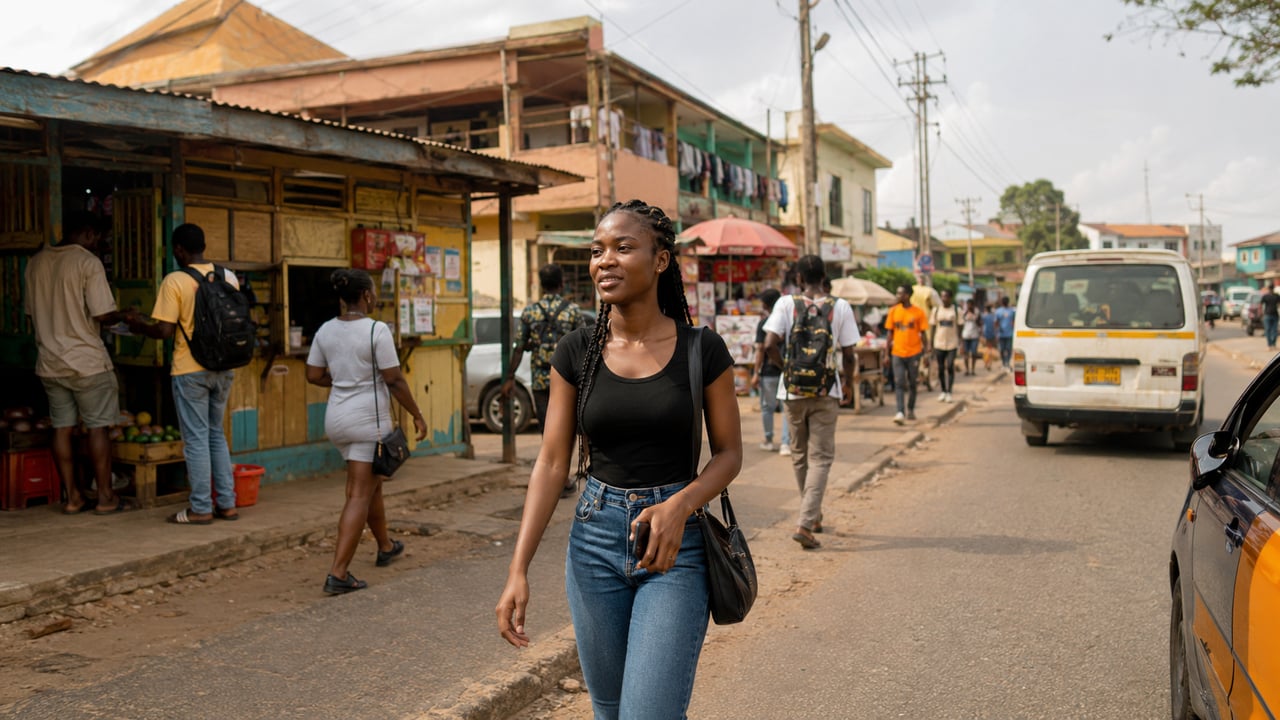
If you ask me where I’m from, I’ll say Kumasi. But if you ask me where I really grew up, where I learned how to cross the road without fear, buy food with confidence, and know which shortcut will save you five minutes, I’ll say Ayeduase.
I’m 24 now, and I’ve lived here my whole life. So yes, I may be slightly biased. But I also believe Ayeduase has earned the right to be loved loudly.
Ayeduase is one of those neighborhoods that never feels fully asleep. Maybe it’s because of KNUST nearby. Maybe it’s because students are always moving in and out, food vendors are always setting up, taxis are always passing, and someone is always asking, “Madam, where are you going?” Whatever the reason, Ayeduase has energy.
Not loud in an annoying way. More like lively. Like something is always happening.
One thing everyone knows about Ayeduase is its connection to KNUST. The university has shaped the area in a big way. You see it in the hostels, the small food joints, the printing shops, the mobile money vendors, the provision stores, and the way almost every corner has someone selling something a student probably needs.
Even if you’re not a student, you can feel the student life around you. People are rushing to lectures, coming back from group meetings, buying waakye, looking for a taxi, or standing somewhere with a backpack and a very serious face as if the whole world depends on their next quiz.
And honestly, that is part of the charm.
Ayeduase feels young because young people are everywhere. They bring movement, ideas, noise, fashion, food cravings, and small drama. You will see someone dressed like they are going for a presentation at 8 a.m., and by evening that same person is in slippers buying fried yam. That is Ayeduase for you.
If you live in Ayeduase and you don’t know where to find good food, then I’m sorry, but are you really living here?
There is food for every budget and every mood. If you want something quick, you’ll find it. If you want something filling, you’ll find it. If you are pretending you are not hungry but your body knows the truth, Ayeduase will expose you.
There is always someone selling waakye, fried rice, noodles, kenkey, kelewele, pastries, or fresh juice. And because of the student population, food vendors know they cannot play too much with price. People here know value. If the food is small, we will talk. If the stew is weak, we will remember. If your food is good, we will bring friends.
That is the Ayeduase food economy. Very honest. Very emotional.
Growing up here, I did not always realize how convenient Ayeduase was. It was normal for me to step out and find food, basic groceries, mobile money, a taxi, a seamstress, a barber, a printing shop, or someone who knows someone who can fix something.
Then you visit another place, and suddenly you understand.
Ayeduase may not be perfect, but it is practical. You can live here without feeling cut off. Whether you are a student, a young worker, a small business owner, or a family, there is a rhythm that makes everyday life easier.
You don’t always need to go far to get things done. And in Kumasi, that matters.
When I was younger, some parts of Ayeduase felt quieter. Over the years, more hostels, shops, and businesses have come up. The area has grown because more people want to live near KNUST and close to the action.
Sometimes I miss the old quietness. I won’t lie. There are days when the traffic, the dust, the noise, or the number of people moving around can test your patience.
But growth also brings opportunity. More rentals. More businesses. More places to eat. More services. More life.
That is what makes Ayeduase interesting. It is not frozen in time. It keeps changing, but if you have lived here long enough, you can still recognize its heart.
For me, Ayeduase is special because it feels like a place where people are trying.
Students are trying to finish school. Vendors are trying to grow their businesses. Landlords are building. Agents are moving around. Young people are figuring life out. Families are raising children. Everyone is doing something.
It is not fancy in a show-off way. It is not quiet, like those neighborhoods where even the goats seem to whisper. Ayeduase is alive.
And I like that.
I like that I can walk out and see familiar faces. I like that someone will call me “sister” even if they don’t know my name. I like that the area has both local community and student energy. I like that it feels serious and unserious at the same time.
That balance is very Kumasi.
Yes, but with honesty.
If you want a neighborhood that is active, convenient, close to KNUST, and full of rental options, Ayeduase is worth considering. It is especially good for students, young professionals, and anyone who wants to stay in a lively area with easy access to food, transport, and basic services.
But if you want total silence, minimal movement, and a place where not much happens, Ayeduase may not be your first choice.
This is a neighborhood with personality. You have to like that.
Ayeduase raised me in its own way. It taught me how to be alert, friendly, sharp, patient, and independent. It taught me that community is not always quiet and perfect. Sometimes, community is the woman who remembers how you like your food, the taxi driver who knows your junction, the vendor who gives you extra pepper, and the neighbor who somehow knows everything happening before you do.
That is Ayeduase.
Not perfect. Not boring. Not pretending.
Just real.
And for me, that is what makes it home.
Looking for a place in Ayeduase or nearby? Browse rental listings on RentRightGH and connect directly with property listers
Ivy is a 24-year-old graphic designer with a sharp eye for culture, everyday life, and community stories. She writes with warmth, honesty, and a practical feel for how people live, move, and settle in Ghana.